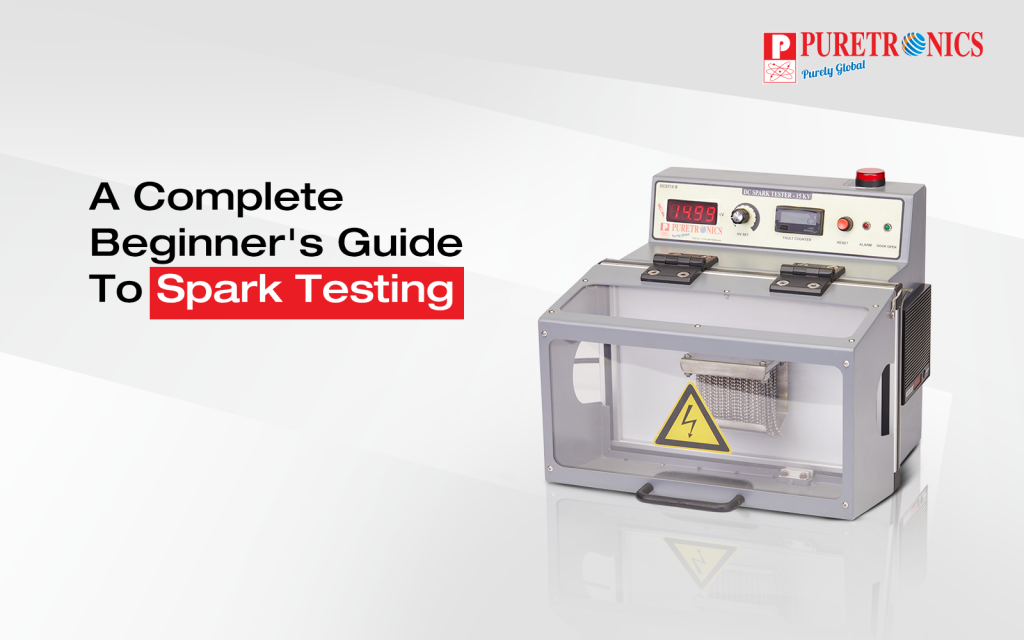
A Complete Beginner's Guide To Spark Testing
People who make wires and cables need to make sure everything is okay at every step. They want to send out good products. One important check is called Spark Testing. This is a way to find problems with the insulation on cables and wires before they get to the people who buy them.
If you are new to making cables or if you are just learning about quality control, this guide is for you. It will tell you everything you need to know about spark testing. You will learn what spark testing is, how it works, and why it is important. You will also learn how to pick the Spark Tester for Cables.
When you finish reading this guide, you will know why spark testing is so important for making cables. You will see how it helps the people who make cables do a job, save money, and keep people safe. Spark testing is a part of making sure cables are good and safe, and it helps manufacturers make high-quality products.
What Is Spark Testing?
Spark testing is a way to check if the insulation on wires and cables is good. It does this without hurting the wires and cables. When we do a spark test, we make a spark between two electrodes. If the insulation has a hole or a problem, the spark will find its way through the hole. We can see the spark. We know the insulation is not good. This means the cable is not good and we should not use it.
So spark testing is a way to check the insulation around the wire, inside the cable. It helps us make sure the cable is safe and works well. We use spark testing to make sure our electrical cables are of quality. Spark testing is a step when we are checking the quality of electrical cables.
Why Spark Testing Matters In Cable Production
Cables are everywhere in our lives, from factories to offices and homes. We use them in our cars in power distribution and in the things we buy, like computers and phones. Sometimes cables can have problems that we cannot see, like insulation defects.
These defects can cause a lot of trouble, such as:
- Circuits
- Electrical leakage
- Overheating
- Fire hazards
- Product failures
That is why Spark Testing is so important. It helps us find these problems in cables before they become big issues. Cable manufacturers use Spark Testing to find insulation flaws that are too small to see with our eyes.
Using Spark Testing is good for business, too. It helps companies:
- Reduce the number of products that fail when they are being used
- Make customers happier with the products they buy
- Lower the number of warranty claims
- Make sure they are following industry rules
- Save money by not having to fix or throw away products
That is why any company that makes cables and wants to be serious about quality will use Spark Testing. Cable manufacturers will include Spark Testing in their quality control process to make sure their cables are safe and work well. Spark Testing is a part of making sure cables are of good quality. Cable manufacturers need Spark Testing to ensure that their cables meet the standards that customers expect from them.
How Spark Testing Works
When we do spark testing, we usually set it up so that the cable goes between two metal points. One of these points gives the cable a high voltage, and the other point is like a safety ground. If the insulation on the cable is perfect, we will not see any sparks flying between the cable and the metal point. If the insulation has a tiny problem like a small hole or a thin spot, the electricity will make the air around it spark, and we will see a spark.
Key Components Of A Spark Tester System
- High-Voltage Generator: This part makes sure the voltage is always the same when we test the insulation
- Electrode Set: These are the two metal points that the cable passes between
- Detection System: This can be a sensor or just a way for us to see the sparks with our eyes
- Control Panel: This is where the person running the test can set how much voltage to use and see what is happening
When we pick a Spark Tester for the cables, the people making them usually choose a system that lets us change the voltage, can find sparks reliably, and is easy to add to the production line where the cables are made.
Types of Spark Testing Methods
There are two ways to do spark testing:
- The first way is with alternating current.
- The second way is with direct current.
1. AC Spark Testing
When we use AC Spark Testing, we use alternating current. This method is good for finding large problems with the insulation. People use AC spark testers a lot to check cables, hoses, and tubes.
This is because the current is always changing, which makes it more likely to find tiny problems with the insulation. Spark testing is a part of checking cables, hoses, and tubes.
2. DC Spark Testing
In DC Spark Testing, we use current. This method is better for some types of insulation that can become polarized or charged when we use alternating current.
DC spark testing is not used much to check cables. However, it can be useful in situations. Spark testing with current is a good option when we need to check specific types of insulation. Spark testing is a tool for people who work with cables, hoses, and tubes.
Setting The Right Test Voltage
One important thing when we do spark testing is to set the voltage at the right level. We need to make sure the voltage is high enough to find any problems. Not so high that it hurts the good insulation.
We usually decide on the voltage setting based on three things:
- The type of cable we are using
- How thick the insulation is
- What the industry says we should do
- What the cable is going to be used for
For example, if the insulation is really thick, we need to use a test voltage. If the material is thin,n we need to use a lower test voltage. A lot of the Spark Tester, for cable models, lets us set the voltage just the way we want, so it is easy for manufacturers to adjust it based on what they need for their products.
Interpreting Spark Test Results
To make production more efficient and ensure quality, spark testing is often done right on the production line. This means the testing happens after the material is shaped and cooled, before it’s processed further, like being wound up or covered.
Here are some benefits of integrating Spark testing:
- We can catch insulation problems early
- We don’t need to inspect much manually
- We can produce more
- We get feedback on quality
A spark tester, for cables, can be connected to PLCs and HMIs so that operators can easily see and use the data.
Choosing the Right Spark Tester for Cables
Selecting a Spark Tester for Cables is important. It depends on things:
Voltage Range
Pick a Spark Tester for Cables that can handle the voltage of your cables. Some testers can work with voltages from a few thousand volts to tens of thousands of volts.
Detection Sensitivity
A sensitive Spark Tester for Cables can find small problems with the insulation. Look for one that can detect arcs well and has settings you can adjust.
Integration Capabilities
Nowadays, machines in manufacturing need to be smart. Make sure your Spark Tester for Cables can connect to machines like PLCs and to systems that track production.
Ease of Use
A Spark Tester for Cables with a touchscreen, settings, and automatic reporting makes it easier to use every day. It also means you need training.
Safety Features
Testing with voltage must be safe. Ensure the Spark Tester for Cables has a cover emergency stop button and safety locks to keep the operator safe.
Puretronics’ Spark Tester, for Cables, is designed with these things in mind. It is built to last,t detects problems, and works well with automation.
Benefits of Spark Testing
Here are the benefits you get when you use Spark Testing to make cables:
The Cables Are Really Well Insulated
Spark Testing checks if the insulation is good and if there are any problems that you cannot see. This happens before the cables leave the factory where they are made.
Cables Are Less Likely To Fail When They Are Used.
If you find the bad cables early, you can stop them from going out and falling when people are using them.
The factory Can Make Cables Faster
When you use machines to test the cables, it goes faster. The people making the cables do not have to slow down.
Cables Meet The Rules.
There are rules that say you have to test the insulation of cables. Spark Testing helps you follow these rules.
You can keep track of how well the cables are made
New Spark Testing machines can keep a record of the results. This helps you make sure everything is okay. You can make the process better.
Common Applications of Spark Testing
Spark Testing is used a lot in industries that need to keep things insulated all the time.
These industries include:
- Making power and control cables
- Producing wires
- Making fiber optic cables for the insulation that comes after the first layer
- Making rubber hoses and tubes
- Making plastic sheets by pushing plastic through a machine to check for problems on the surface
In all these industries that use Spark Testing, it is a good way to make sure the products are good, without spending too much money. Spark Testing helps to keep the quality of the products.
Safety Considerations During Spark Testing
When you are doing spark testing, you have to think about safety. You are working with voltages, so you have to be very careful.
You should always do these things:
- Make sure all the equipment is properly grounded
- Put up barriers around the spark tester to protect people
- Teach the people who use the spark tester about voltage safety
- Make sure there is a way to stop the tester quickly in an emergency
- Check and fix the spark tester parts on a basis
The spark testing systems, from Puretronics, have safety features that meet industry standards. This means they help keep people safe while still giving you test results. Puretronics spark testing systems are designed to protect the people using them.
Training and Skill Requirements
When you are doing Spark Testing, the people running the tests must be trained. They need to know how to do things.
- They need to understand what the test results mean
- They have to know how to change the voltage and how sensitive the test should be
- They need to be able to tell when the test is giving the result, like when it says something is wrong when it is not, or when it says something is okay when it is not
- They have to take care of the parts that are used for the test, such as the electrodes and the high-voltage components
- They need to know how to use the interface that people use to interact with the machine and how to get the test results
If the people running the tests get training, they can do a good job of running the Spark Testing stations and help make sure that everything is working properly.
Future Trends in Spark Testing
We are seeing some changes in Spark Testing as factories get smarter:
- Using computers to make reports and analyze data
- Watching spark tests from afar
- Fixing problems before they happen
- Automatically adjusting spark test equipment
- Connecting Spark tests to quality control systems
These changes will make spark testing a more useful tool for checking quality.
Summary
For people who make cables, Spark Testing is really important. It is not about checking the quality of the cables. Spark Testing is also about making sure the cables are safe and work well. When Spark Testing finds problems with the insulation early, it helps keep the people who use the cables safe. It also helps save money. Makes the company look good.
You need to pick the Spark Tester for your cables. This means you need a tester that can be adjusted to find problems precisely, works with automated systems, and is safe to use. When you have a Spark Test, you can be sure that your cables are made with the best quality and work well.
At Puretronics, we make Spark Testers for cables. Our testers are made to be accurate for a long time and work well with modern cable-making machines. If you are just starting or want to improve your quality checks, our Spark Testing products can help. They will help you make cables that waste less and feel more confident about the cables you make.