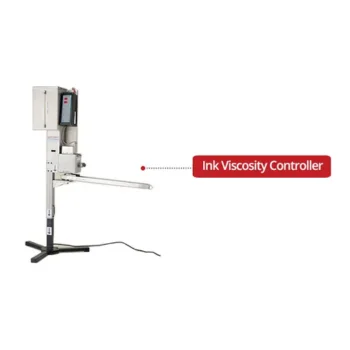
Ink Viscosity Controller (CRS-IVC2K) is the new electronic viscosity meter by Puretronics for measuring and regulating the ink in the printing press. The working principal is based on the motor which gives effective and yet precise output. The ink coming from the pump is circulated to a measuring body which is measuring the viscosity. The viscosity is analysed by a microprocessor and displayed in seconds.
Ink Viscosity Controller
Puretronics Ink Viscosity Controller ensures optimal ink viscosity, revolutionizing printing processes and enhancing color accuracy.
- FEATURES
- 2 Mode Operation :
- (i) In manual mode the Ink Viscosity Controller system displays the measured viscosity. The front panel keyboard is used to correct the error by adding new solvent.
- (ii) In automatic mode the system executes a comparison between the programmed viscosity and the measured one. Based on the magnitude of the difference new solvent is added to correct the error.
- Power: AC 220V, 1.6A
- Power Consumption: 100W Max
- The control range of Concentrations: 5s - 35s
- Maximum Dilution: 72l/h
- Maximum amount of ink circulation: 15l/min (or 50l/min optional)
Request A Call Back
The Quiet Hero of the Pressroom: Ink Viscosity Controller
It starts with a small thing. The solvent evaporates a little faster than expected, the pressroom warms up, and the ink thickens by a hair. Nobody notices at first. Then the colour drifts, should the operator stop the press to adjust, a few hundred metres go to the bin, and the job that should have finished on time slips into the next shift.
Read More about Ink Viscosity ControllersInk viscosity rarely makes headlines, yet it quietly decides whether a print run is smooth or stressful. Puretronics built its electronic viscosity solution to take that uncertainty out of the pressroom.
Meet the LINK-C
The LINK-C is an electronic viscosity meter and regulator designed to measure and control ink directly on the printing press. It works on the falling ball principle. Ink from the pump is circulated through a measuring tube, and a ball is allowed to fall through it. The time the ball takes to fall depends on the ink’s viscosity, so thicker ink slows the ball and thinner ink lets it drop faster. The system converts this fall time into a viscosity reading and shows the result on the display.
In other words, the press no longer depends on a cup, a stopwatch and an operator’s best guess. Every Ink Viscosity Controller reading comes from the live ink stream itself, so what operators see reflects what the press is actually running.
Two Ways to Work, One Goal
Not every plant wants the same level of automation on day one, so the system offers two operating modes.
In manual mode, the Ink Viscosity Controller displays the measured viscosity, and the operator uses the front panel keyboard to correct any error by adding fresh solvent. It is a natural starting point for teams building confidence with electronics measurement.
In automatic mode, the system compares the programmed viscosity with the measured value and adds solvent according to the size of the difference. The press effectively looks after itself, correcting small drifts before anyone would have noticed them.
The Numbers Behind the Confidence
The unit runs on a 24 VDC supply. It controls viscosity across a range of 5 to 35 seconds, handles a maximum dilution of 72 litres per hour, and supports ink circulation of up to 15 litres per minute, with a 50 liters per minute option for larger requirements. These figures make it suitable for a broad range of printing press set-ups, from compact lines to busy production floors.
Why It Matters So Much
Ink is a living material. Temperature, press speed, and solvent evaporation constantly change its behaviour, and viscosity sits at the centre of that change. When it is too thick, print can look heavy, dull, or uneven. When it is too thin, colours turn weak and inconsistent. Either way, the customer sees it first.
Consistent viscosity delivers consistent colour, steadier ink transfer, and fewer interruptions. Printers spend less time chasing shade variations, and less ink and solvent go to waste. For brands that expect the same colour on every reorder, this consistency is not a luxury, it is a requirement.
Because measurement happens on the circulating ink itself, the operators get feedback in seconds instead of waiting for periodic manual checks. A reliable Ink Viscosity Controller works quietly in the background, measuring continuously, correcting precisely, and giving operators more time to watch the print instead of the ink bucket. That is the difference between reacting to problems and preventing them.
The Investor's Perspective
A purchase like this should be judged by what it prevents. Each manual correction costs production time. Each shade drift risks a rejected job. Each over-diluted or over-thick batch wastes ink that was paid for. An Ink Viscosity Controller attacks all three at once, and the gains repeat on every shift, every job, and every press it serves.
There is a people advantage too. Experienced operators are hard to find and harder to replace. Automatic regulation captures their judgement in a repeatable system, so quality no longer rises and falls with who happens to be on duty. It also frees skilled staff to focus on setup and quality rather than constant ink adjustment.
Finally, it prepares a plant for growth. Higher speeds, shorter runs, and stricter colour expectations are becoming normal. Businesses that bring viscosity under control now will meet those demands comfortably, while others struggle to keep pace.
A Small Instrument with a Big Return
The most valuable machines in a pressroom are not always the biggest ones. Sometimes the best return comes from the instrument that keeps everything else performing at its best. If your presses rely on manual viscosity checks today, now is the time to see what an Ink Viscosity Controller can change. Contact Puretronics through the call-back form, share your press details, and our team will help you choose the right configuration.
Frequently Asked Questions
It is an electronic viscosity meter and regulator that measures and controls ink on the printing press. It reads viscosity from the live circulating ink and shows the result within seconds.
It keeps viscosity stable, which gives consistent colours and steadier ink transfer. This means fewer shade variations, less waste, and fewer press interruptions.
In manual mode, the operator reads the viscosity and adds solvent using the front panel keyboard. In automatic mode, the system compares the set value with the measured value and adds solvent on its own.
It runs on AC 220V at 1.6A, with a maximum power of 100W and a viscosity control range of 5 to 35 seconds. It handles dilution up to 72 litres per hour and ink circulation up to 15 liters per minute, with a 50 litres per minute option.
It corrects small viscosity drifts before they cause shade problems, so fewer metres are rejected. It also avoids over-diluted or over-thick batches that waste ink.
It reduces manual corrections, rejected jobs, and wasted ink on every shift. It also captures operator judgement in a repeatable system, so quality stays steady across shifts and prepares the plant for higher speeds and shorter runs.