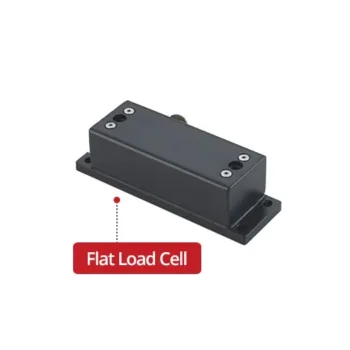
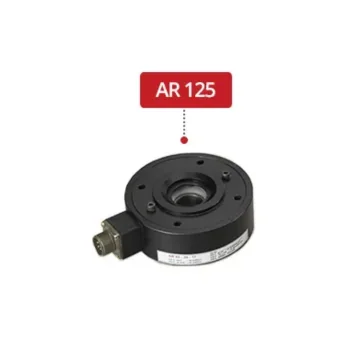
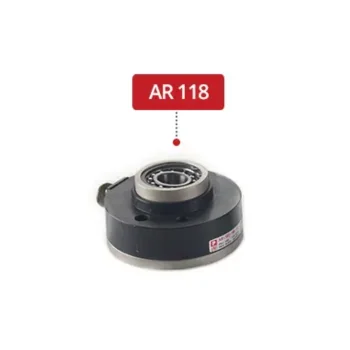
Loadcell range is introduced by Puretronics for measuring tension of the product online. Measurement of the tension value of all materials including paper, cardboard, plastic film, foil, rubber and wire. Precision measurements of web tension is essential to ensure consistent product quality and to maximize productivity. Different models are available to meet the requirement like Flat type, Round type and Round Hollow type.
Web Tension Load Cell
Web Tension Load Cell by Puretronics Enhances accuracy and efficiency through precise force measurement, ensuring optimal performance. Different models are Flat Load Cells, Axial Load Cells.
Importance of Loadcell
Precious measurement of web tension is essential to ensure consistent product quality and maximize productivity. Puretronics presents loadcells for various automation applications to cover most of automation in converting and process machines. Measurement of tension value of all materials including paper, cardboard, films, foils, rubber, sheet metal, fabric, metal wire and can be installed in any zone of a web production process.
Strain Gauge Technology
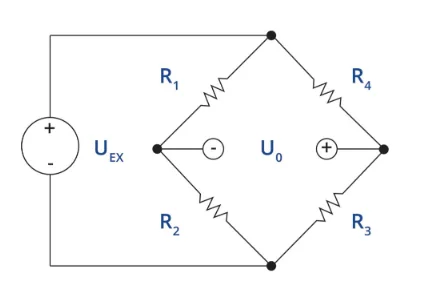
Wheatstone bridge illustrates the concept of a difference measurement, which is extremely accurate. The amplifier provides a stable excitation voltage of 10VDC to the force sensor. When load is applied the strain gauge is either elongated or compressed. This change in length leads to a change of overall resistance of the circuit. These changes are been calculated and readings are been displayed.
- Guide for Loadcell Section
- Features
- Technical Specification
- Accessory
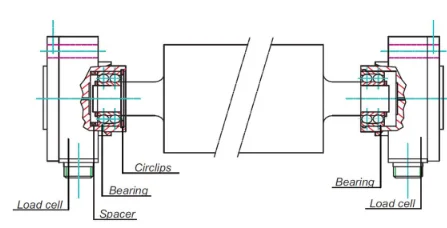
Either roller bearing or loadcell bearing should be used and the other bearing should be locked.For accurate measurement and more precise output roller bearing should have a lock and it is recommended that roller bearing should be locked.
It is important to select correct loadcell rating for an application. This can be determined by calculating the net force by choosing the wrap configuration diagram shown.
The selected load rating may be 20% less than the computed Net Force. The actual force on the transducer will read 125% of the load rating before hitting the stops. This is acceptable because the Net Force formula contains an oversizing factor of 2, which means that the actual force exerted on the transducer will not exceed its rating. Sometimes, a roll is so heavy that its weight uses up most of the operating range of the transducer.
At this condition since the adjustment range of the electronic circuit has been exceeded possible to adjust the tension indicating meter to read zero when tension is zero.
To rectify if the load is too heavy to adjust the tension meter at zero
a. Compare the laod rating along with the effective weight of the roll
b. If Wcos(A) is more than 95% of the load rating chosen
If this case changes to be made to reduce Wcos(A) less than 95% of load rating
- Reduce the transducer roll weight
- Increase angle (A)
- Use the next higher load rating (This is the least desirable choice because it reduces transducer signal output)
- Ruggedly constructed for long life and dependability
- Maximum mechanical overload protection for upto 10x time
- Full whear stone bridge designed for measurement accuracy and low temprature drift
- Certification CE, ATEX (Explosion proof)
- Easy installations
| MODEL | AR-85 Series | AR-118 Series | AR-125 Series | AR-ST Series |
|---|---|---|---|---|
| Strain guage resistance | 350 Ω | |||
| Excitation voltage | 10 VDC | |||
| Mating electrical connector | Military grade L Type / 90° Type Standard Type | |||
| Working temperature | 0° to 50° C | |||
| Sensitivity | 2mV/V | |||
| Certification |  |
|||
| Mounting | Flange Mount | Flange Mount | Flange mount with pilot hole | Pillow Block |
| Capacity | 5kg, 10kg, 20kg, 50kg, 100kg, 200kg | 50kg, 100kg, 200kg, 500kg | 50kg, 100kg, 200kg, 500kg | 100kg, 200kg, 500kg, 2000kg |
| Shaft OD | 17mm | 25mm | 25mm | 35mm / 40mm |
| Signal Output | 20mV / 10V | 20mV / 10V | 20mV / 10V | 20mV / 10V |
| Overall Protection | Up to 300% of full scale value | Up to 300% of full scale value | Up to 300% of full scale value | Up to 300% of full scale value |
| Small Round Bracket |
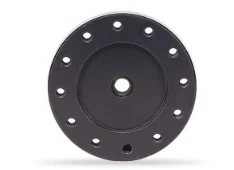
|
|
|---|---|---|
| Big Round Bracket |
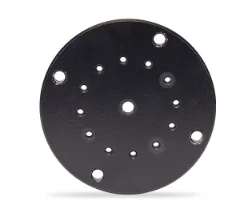
|
|
| Cable |
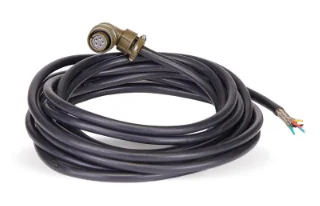
|
|
| L Type Bracket AR-85 |
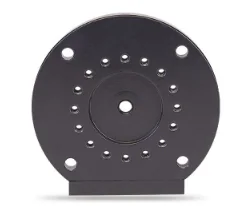
|
|
| Bearing Block |
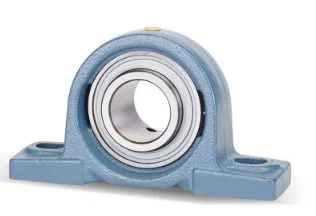
|
Request A Call Back
The Force You Can't See, But Definitely Feel In The Output
Tension is one of those things you only notice when it's wrong. A little too loose, and material sags, wrinkles, or misaligns. A little too tight, and it stretches, tears, or snaps mid-run. Getting it right, consistently, isn't luck, it's measurement. And that's exactly the job of a Web Tension Load Cell. At Puretronics, we've spent years building tension-sensing solutions that quietly keep production lines steady, batch after batch.
Read More about Web Tension Load CellsWhat Is It Actually Measuring?
A Web Tension Load Cell measures the pulling force acting on a moving material as it passes through a production line, whether that's wire, fabric, film, paper, or foil. It doesn't guess or estimate; it reads the actual force in real time and feeds that data back to the control system, so tension can be adjusted before it becomes a visible problem.
Think of it as a constant pulse check on your material. Without it, tension control becomes reactive, you find out something went wrong only after the product shows it.
Why This Matters More Than It Seems
Inconsistent tension doesn't always announce itself immediately. Sometimes it shows up as subtle defects, slight misalignment, uneven winding, or minor stretching that only becomes obvious once a customer flags it. A properly placed Web Tension Load Cell catches these deviations early, before they turn into rejected batches or quality complaints.
It also protects the material itself. Excess tension can permanently stretch or damage delicate materials, while too little tension causes loose winding, wrinkling, or misfeeds further down the line. Getting the balance right isn't a one-time setup, it needs continuous, accurate feedback, which is exactly what this device provides.
Not Just A Wire And Cable Component
While wire and cable production is one of the most common applications, tension measurement plays an equally important role in several other industries:
- Printing and Converting: maintaining consistent web tension across high-speed printing and laminating processes
- Packaging: ensuring films and wraps stay properly tensioned during cutting and sealing
- Paper and Corrugation: preventing wrinkling or tearing across continuous paper feeds
- Textile: keeping fabric tension steady during weaving, dyeing, or finishing processes
- Rubber Processing: managing tension across flexible, stretch-prone materials
- Metal Industry: controlling tension during metal strip and foil processing, where even minor stretching affects dimensional accuracy
Across every one of these applications, the underlying challenge is the same: material moving continuously through a line needs consistent, measurable tension to avoid defects, waste, and downtime. A Web Tension Load Cell solves that challenge regardless of what's actually moving through the system.
The Cost Of Getting Tension Wrong
Manufacturers often underestimate how much inconsistent tension actually costs them. It's rarely one dramatic failure, it's a steady accumulation of small issues: slightly uneven rolls, minor material waste, more frequent operator adjustments, and quality checks that take longer than they should. Individually, none of these feel urgent. Together, they quietly erode efficiency and profitability over time.
A reliable Web Tension Load Cell removes much of this guesswork. Instead of operators manually adjusting tension based on visual inspection or experience, the system provides accurate, continuous data that keeps tensions within the right range automatically.
Why The Setup Around It Matters Just As Much
A tension sensor is only as good as how well it's integrated into your line. Environmental factors, vibration, temperature changes, dust, and continuous operations all affect long-term performance. This is why working with a manufacturer who understands your specific application matters more than simply picking a device off a spec sheet.
A dependable partner takes the time to understand your material type, line speed, and operating environment before recommending a configuration, rather than offering a one-size-fits-all solution and hoping it performs.
Where Puretronics Fits In
At Puretronics, we've built our approach around real production conditions, not just theoretical specifications. Whether it's a wire and cable line, a printing press, a textile mill, or a packaging unit, our focus with every Web Tension Load Cell stays the same: give manufacturers tension data they can actually trust, so their lines run smoother and their output stays consistent.
If uneven winding, material waste, or inconsistent quality has been a recurring issue on your line, it might be time to take a closer look at how tension is being measured, not just controlled.