>Defect Detect System For Paper & Metalized Films is optimised to detect from small surface defects up to large density defects on film continuous web productions, using state of the art linear scan technology to guarantee the achievement of the demanding resolution/speed requirements.
Defect Detect System For Paper & Metalized Films
Ensure flawless quality with Puretronics' Defect Detection System designed for paper and metalized films. Our advanced technology meticulously identifies and addresses defects, guaranteeing superior product quality. Trust Puretronics for reliable, high-performance defect detection solutions tailored for the unique demands of paper and metalized film manufacturing. Elevate your quality assurance with Puretronics, setting new benchmarks for precision and excellence in defect detection.

- Features
- Software Features
- DETECTABLE DEFECTS
- Application
- >Defect Detect System For Paper & Metalized Films has an elegant and robust mechanical support structure, which allows a high immunity to the vibration of the production line.
- A camera case with special mounting which in addition to protect the same, allows easily the fine alignment with the web surface.
- An automatic software procedure of new recipe creation, which is able to calculate automatically the tolerances according to the colour or transparency conditions of a sample surface that corresponds to the production (if any defects are there in the sample it automatically gets removed from the software through tolerance settings)
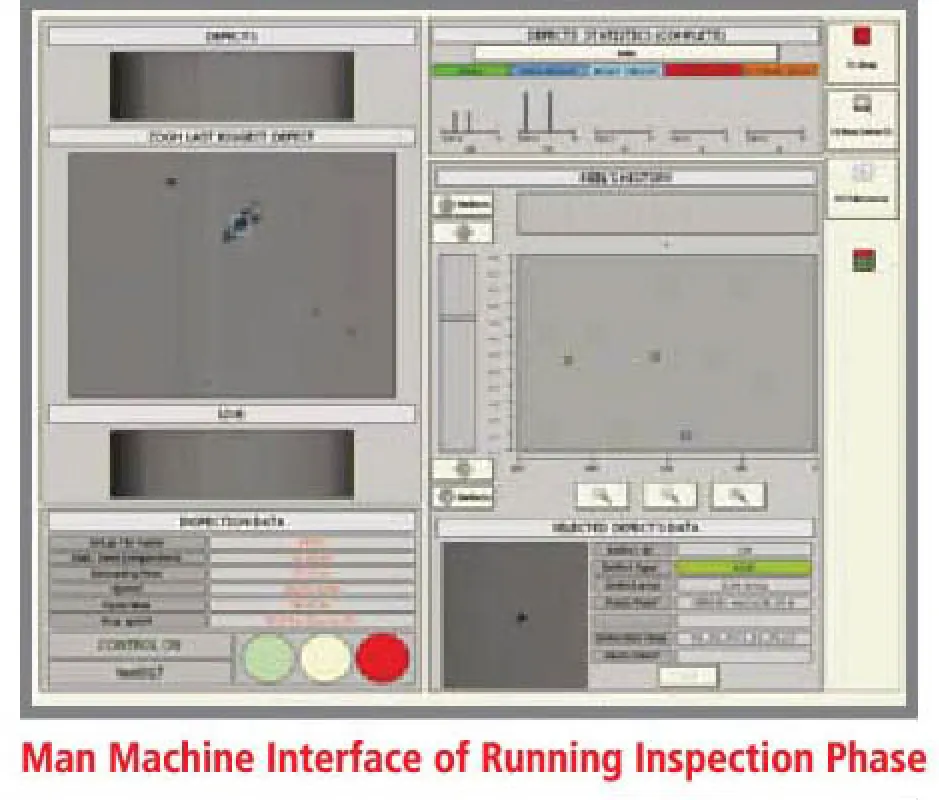
- Multiple dedicated view in the running mode that allow to check the production duty and statistic simultaneously while inspecting the material
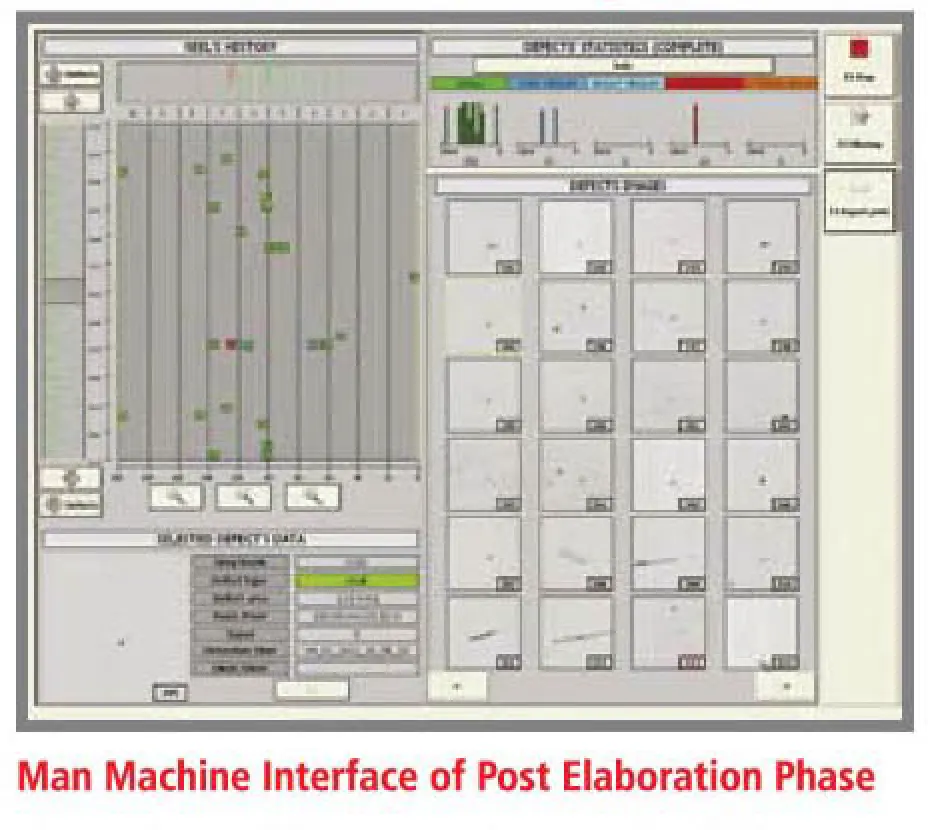
- A complete post-processing tool, in order to analyze the web inspected in the quality control laboratory with an accurate analysis of the material.
- An innovative way to increase Workflow.
Thanks to many years of research and development, linescan has achieved many innovations and important tasks, some listed below:
- Access protected by password and login divided in 3 classes: operator, supervisor and installer, providing a statistic with information on the various logins
- Online-Help in compressed htm! format (CHM).
- Four new running views, with the ability to zoom defects, to have an history of the detected defects and a new longitudinal and transversal graphical and statistical representation, all updated in real time!
- Automatic procedure for a new job (new product under inspection) including automatic light regulation (the system finds in automatic way the level of illumination to optimise the contrast) and auto tolerances setting (the system verifies in automatic way the best tolerances set in order to reduce the false detection)
- Easy set of the fine tuning of the tolerances divided by size and contrast of defect, further simplified for the operator by the new management levels with just 3 classes of sensibility (low, medium and high) previously defined by the supervisor.
- Report of the inspection and function of automatic report printing with possibility to choose between defects details, images and histogram.
- Management of different kind of warning (for instance to turn on a red lamp) and serious alarm (for instance to stop the machine).
- Management of several markers or adhesive flags to create a reference of the defect position on the film.
| PLASTIC AND TRANSPARENT | METALLIIZED | PAPER | NON WOVENS | WOVENS | GLASS FIBER |
|---|---|---|---|---|---|
| Oil Mark | Low Metallization | Oil Mark | Burnt | Soft Texture | Low Density of Fiber |
| Pinholes | Pinholes | Pinholes | Material Lack | Short Texture | Small Stick |
| Dirt | Trans-way Lines | Dirt | Clusters | Wrong String | Bubbles Inclusion |
| Foreign Bodies | Foreign Bodies | Foreign Bodies | Low Density | Missing String | Cluster |
| Scratch | Scratch | Scratch | Fiber Buildup | Broke Texture | Spots |
| Gels | Macro-hole | Stain | Irregular Texture | Filament | |
| Impurity | Splashes | ||||
| Flying Object | Flying Object |
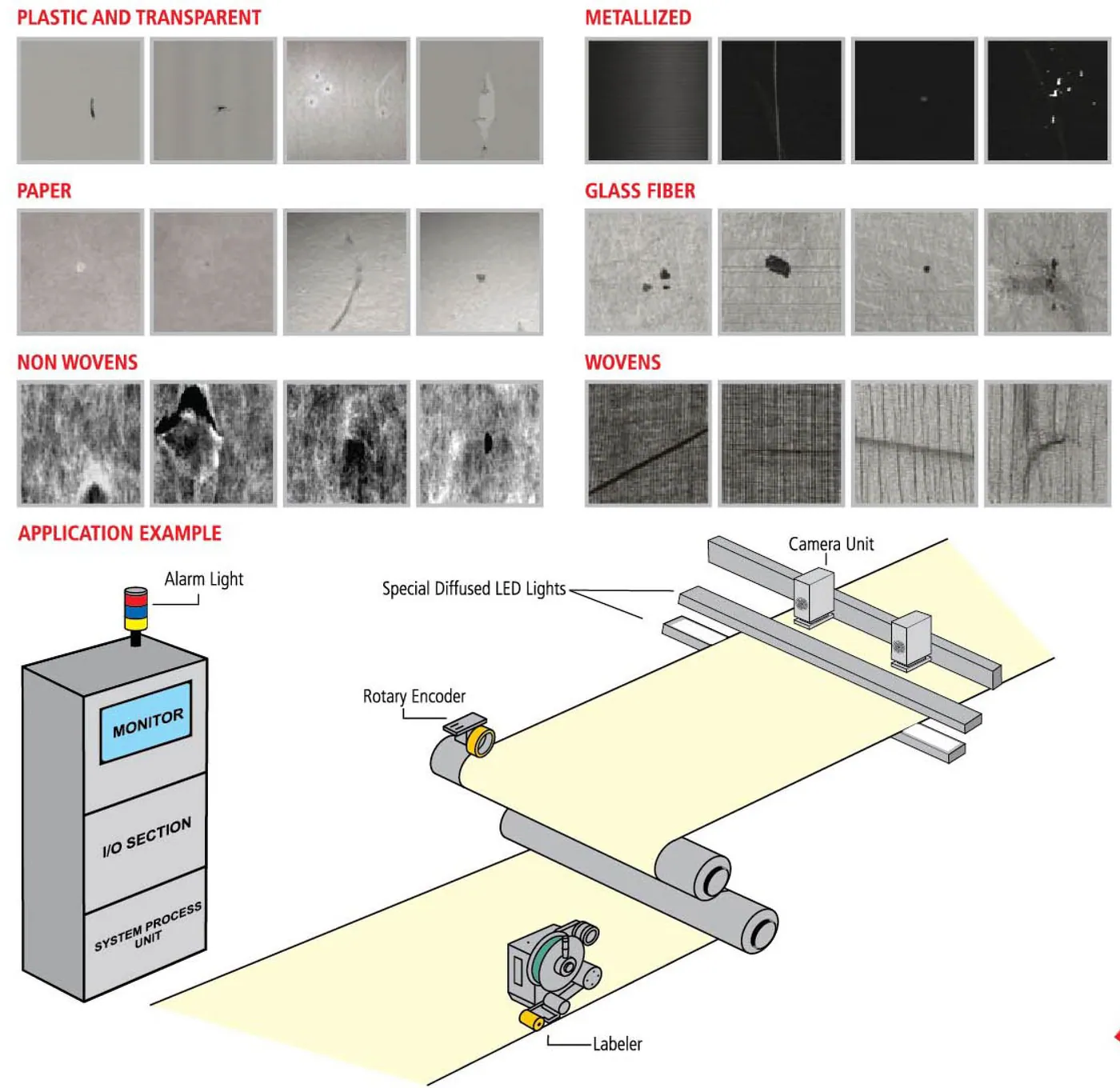
- Transparent, laminated or opaque films
- Metallized or transparent or paper films
- Special Adhesive Films
- Woven and not woven films
- Paper reels
- Glass fiber films
- Float glass production
- Lexan or polycarbonate sheets
- Aluminium or stainless steel reels.
Request A Call Back
Plain Film Defect Detection System: Catch Flaws Early, Reduce Waste
A pinhole that goes unnoticed on the production line does not stay a pinhole. It travels through coating, printing, lamination, and slitting, collecting cost at every step, and only becomes visible when a customer opens the pack or a converter rejects the roll. The same is true whether the material is plastic film, paper, metallized film, or textile. Puretronics offers a Defect Detection System built to catch these flaws at the very start of that journey, while they are still cheap to fix.
Read More about Plain Film Defect DetectionWhy Paper & Metallized Films Demand Extra Attention
Thin, reflective, and often transparent, these materials leave very little room for error. A scratch on a metallised layer, a splash of coating, or an oil mark on paper can change how a product looks and performs. The human eye, however trained, cannot track such faults on a web moving at production speed. Automated inspection can, and it never gets tired at the end of a long shift.
The Hidden Cost Chain
Every process step adds value to a roll, and every step adds loss if a defect slips through. Defective material that is printed, laminated, and slit has already consumed ink, adhesive, energy, and machine time before it is discovered. Catching a fault at source means only the affected section is lost, rather than the finished goods built on top of it.
From Alarm to Answer
Finding a defect is only half the job; understanding why it happened is where real savings begin. A modern Defect Detection System turns each detection into information. Operators can review a history of detected defects, study how they are distributed along and across the web, and mark their positions on the film with flags for easy removal later. Warnings can be separated from serious alarms, so minor issues prompt attention while critical ones can stop the machines.
Over time, this record shows patterns: faults that repeat at the same position point to a roller, while those that cluster in certain hours point to process or material changes. Quality teams move from reacting to preventing.
Proof Your Customers Can Trust
Disputes over quality are expensive, and they often come down to who has the better evidence. Inspection reports, with defect details, images, and histograms, give producers a documented record of what was shipped. Access levels for operators, supervisors, and installers keep settings protected and show who changed what. This accountability, delivered by a well-documented Defect Detection System, gives buyers confidence in a supplier and gives suppliers a firm footing in any claim discussion.
Built for More Than Films
The same approach extends well beyond Paper & Metallized Films. Producers of laminated and adhesive films, woven and non-woven materials, glass fiber, float glass, polycarbonate sheets, and aluminium or stainless steel reels all face the same challenge: flaws that are small, rare, and costly. One inspection philosophy, applied across a plant, helps unify quality standards across different lines.
The Business Case
Planning this investment is easier when the numbers are viewed from the loss side. Consider what a plant spends on rejected rolls, customer returns, rework, and the extra labour needed for manual checking. A reliable Defect Detection System reduces all of these together.
- Less waste: Faults are identified early, so less good material is lost around them.
- Fewer claims: Documented inspection protects relationships with demanding customers.
- Smarter staffing: Operators spend less time staring at the web and more time improving the process.
- Access to premium orders: Buyers who need verified quality prefer suppliers who can prove it.
- Room to grow: As speeds rise and tolerance tighten, automated inspection scales where manual checking cannot.
Easy to Adopt, Quick to Trust
A new inspection tool succeeds only when operators actually use it. That is why setup is kept simple: a sturdy mounting structure copes with line vibration, the camera aligns finely with the web surface, and a new job can be started from a sample so the tolerance and lighting are set for you. Sensitivity is reduced to three easy levels, so any operator can work confidently. With this approach, a Defect Detection System becomes a daily habit on the floor, and every run of Paper & Metallized Films benefits from it.
Frequently Asked Questions
It is an automated system that scans the moving web for flaws like pinholes, scratches, and coating splashes. It catches them at production speed, which the human eye cannot.
A missed defect gets printed, laminated, and slit, wasting ink, adhesive, and machine time. Catching it at source means only the affected section is lost.
It keeps a history of defects and shows how they are spread along and across the web. Repeating positions point to a roller, while time clusters point to process changes.
Yes, inspection reports include defect details, images, and histograms as proof of what was shipped. Access levels also show who changed which settings.
It also works on laminated films, woven and non-woven materials, glass fiber, float glass, and polycarbonate sheets. Aluminium and stainless steel reels are covered too.
Yes, a new job can start from a sample, which sets tolerance and lighting automatically. Sensitivity has just three easy levels, so any operator can use it confidently.