Brakes and Clutches for Controlled Tension and Motion
Every roll, reel, spool, and drum on a machine has to start, run, and stop under control. With too much braking force, thin film, wire, foil, or yarn stretches or snaps. With too little, the material goes slack, tangles, or overruns when the machine stops. Puretronics offers two types of brakes, pneumatic and powder, so manufacturers across industries can choose the control method that suits their machine, material, and process.
Read More about Brakes and ClutchesWhich Brake Fits Your Machine?
| Characteristic | Pneumatic Brake | Powder Brake |
|---|---|---|
| How torque is controlled | By air pressure, using a regulator or tension controller | By electric current, using a controller or tension controller |
| Best suited to | Heavy rolls, higher torque needs, emergency stops | Smooth tension control on light to medium rolls and delicate materials |
| You will need | A compressed air supply | A suitable DC source or controller |
| Typical use | Unwinders, rewinders, slitting lines, heavy reels | Fine wire, film, foil, yarn and narrow webs |
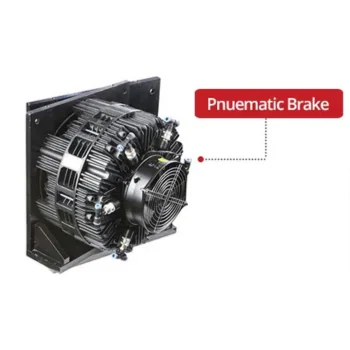
1. Pneumatic Brakes and Clutches
How They Work
Compressed air presses friction surfaces together to apply a brake or engage a clutch. Torque follows air pressure, so operators can raise or lower it with a simple regulator, or let a tension controller adjust it automatically as the roll diameter changes. There is no hydraulic fluid to leak onto the product.
Where They Are Used
- Wire and cable lines: holding back tension on pay-offs and reels
- Printing and converting: unwinders, rewinders, and slitting and rewinding machines
- Packaging film and laminating lines: keeping layers aligned and flat
- Paper and corrugation: controlling heavy reels during unwinding and roll changes
- Textile, rubber and metal strip processing: steady tension on fabric, sheet and coil
- Any line needing emergency stops: bringing heavy rolls to a safe halt
What You Gain
Controlled torque means fewer web or wire breaks, less wrinkling, and cleaner roll edges. It also reduces start-up waste, because the machine reaches stable running conditions sooner after each roll change or restart.
2. Powder Brakes
How They Work
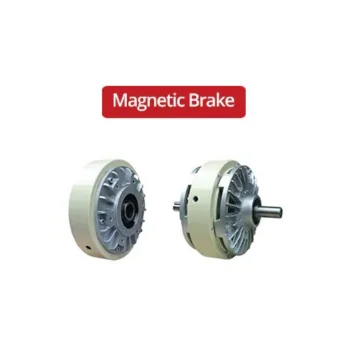
A powder brake uses magnetic powder between the rotor and housing. When current flows through the coil, the powder binds and creates braking torque. Because torque follows the current, it can be adjusted smoothly, either manually or automatically by a tension controller as the roll diameter changes.
Where They Are Used
- Fine wire and filament unwinding: where gentle, steady tension protects thin conductors
- Plastic film, foil and label materials: where tension must stay consistent
- Textile and yarn processing: where delicate threads need smooth control
- Paper and narrow web lines: where tension must be adjusted precisely
- Rubber and speciality materials: where the value of the product makes tension errors costly
What You Gain
Smooth, adjustable torque control gives operators fine command over tension without needing an air supply. This suits delicate or high-value materials where even small tension swings cause scrap.
Part of a Complete Tension System
Brakes work best as part of a larger arrangement. A load cell measures actual tension, a tension controller compares it with the target, and the brake applies the correction. Adding a web guide keeps the material centred while tension stays constant. Together, these instruments give operators control from unwind to rewind.
Why Plan This Investment
Tension-related waste is easy to overlook because it is spread across many small events: a snapped wire, a wrinkled roll, a restart after an uneven stop. Over a year, these add up to significant lost material and machine time. Dependable braking helps reduce them and protects costly films, foils, wires, and papers.
Choosing the Right Setup
The right selection depends on roll weight, line speed, materials, available utilities (compressed air or electrical supply), and how tension is controlled. Share these details with the Puretronics team, and we will help you choose the brake that matches your machine and production goals.