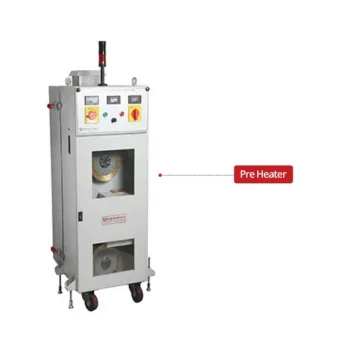
Experienced cable manufacturers will tell you that consistent conductor preheating before extrusion is one of the key factors separating a stable run from a scrap-heavy one. A conductor that enters the extruder cold doesn't bond with insulation the way it should, and that single variable can quietly undo hours of otherwise good production. As an established Online Wire Preheater Manufacturer, Puretronics has spent years solving exactly this problem for cable and wire manufacturers across India.
The Hidden Cost Of Skipping Preheating
Most manufacturers don't realize how much cold-conductor extrusion is costing them until they start tracking scrap rates closely. When a conductor isn't brought to the right temperature before insulation is applied, the bond between conductor and coating weakens. This shows up later as adhesion failures, uneven insulation thickness, or premature product rejection during quality checks. An inline induction wire preheater removes this variable entirely by heating the conductor consistently, right before it enters the extrusion die, so the insulation material bonds the way it was designed to.
How Induction Heating Actually Works
Unlike older heating methods that rely on direct contact or open flame, the resistive induction heating principle is used to give high-efficiency heating of the wire. The wire effectively becomes the heating element, which means the heat is generated exactly where it's needed, with virtually no lag and no wasted energy heating the surrounding air. This is what makes an inline induction wire preheater so much more efficient than traditional preheating methods, there's less energy loss, faster response to speed changes, and far more consistent results batch after batch.
Signs Your Line Might Need Preheating (Or A Better One)
A few warning signs tend to show up before manufacturers realize preheating is the missing piece:
- Insulation appears fine visually but fails adhesion or peel tests
- Scrap rates spike specifically after line speed changes
- Start-up scrap is unusually high every time the line restarts
- Insulation quality varies noticeably between the start and end of a production run
If any of this sounds familiar, it's often not a materials or extrusion problem at all, it's a temperature control problem, and it's exactly what a properly specified preheater is built to solve.
Beyond The Machine: Why The Manufacturer Behind It Matters
Buying an induction preheater isn't just about the unit itself, it's about who's standing behind it once it's installed. As an experienced Online Wire Preheater Manufacturer, we've seen firsthand how the wrong configuration, even with good hardware, leads to inconsistent results. The right partner takes time to understand your conductor sizes, line speeds, and material types before recommending a setup, rather than offering a generic solution and hoping it fits.
This is where Puretronics approaches things differently. We don't just supply an inline induction wire preheater and walk away, our team works with manufacturers to match the unit to their actual production conditions, helping avoid the trial-and-error that often comes with a poorly matched system.
The Ripple Effect Across Your Production Line
Good preheating doesn't just improve insulation quality in isolation, it has a ripple effect across the entire line. When conductors are consistently and predictably heated, line operators can push higher speeds with more confidence, since insulation stress reduces at higher preheat temperatures. Start-up times shrink because the system reaches stable operating conditions faster. And because fewer batches fail quality checks, your quality team spends less time chasing root causes and more time on genuine process improvement.
This is precisely why manufacturers producing power cable, data cable, automotive wire, and building wire increasingly treat preheating as a core part of their process control strategy, not an optional add-on. A dependable inline induction wire preheater essentially pays for itself over time through reduced scrap and improved line efficiency.
What To Look For As You Evaluate Options
If you're comparing preheating systems or preheater manufacturers, prioritize a few things beyond price: how quickly the system responds to speed changes, how consistent the heating is across different conductor sizes, and how much post-installation support the manufacturer offers. A trustworthy Online Wire Preheater Manufacturer should be able to walk you through real production scenarios, not just spec sheets, and help you understand how the system will behave on your specific line, not a generic one.
Built By A Manufacturer Who Understands Your Line
At Puretronics, we've built our reputation as a reliable Online Wire Preheater Manufacturer by staying close to the realities of cable production, not just the theory behind induction heating. If inconsistent insulation quality or high scrap rates are costing you more than they should, it may be time to look at preheating as the fix, not just another line adjustment.
Frequently Asked Questions
Common signs include insulation failing adhesion or peel tests despite looking fine visually, scrap spikes after speed changes, high start-up scrap, inconsistent insulation quality across a run, and blackness of material due to moisture during production.
Induction heating uses the resistive heating principle to heat the conductor from within, generating heat exactly where it's needed with less energy loss and faster response to speed changes.
The bond between the conductor and insulation weakens, often leading to adhesion failures, uneven insulation thickness, and higher rejection rates during quality checks.
Yes, consistent preheating allows higher line speeds, shorter start-up times, and fewer failed batches, reducing the time quality teams spend chasing root causes.
Beyond price, it's important to evaluate how quickly the system responds to speed changes, how consistent the heating is across conductor sizes, and the level of post-installation support offered.